


Movement Tracks
Responsive tracks for gait, balance, and sensory input.
Some skills need space to develop. Movement tracks provide a long, responsive surface for gait training, balance challenges, and whole-body coordination. Children get vestibular and proprioceptive feedback with every movement, making repetitive practice feel like play.
FAQs about Movement Tracks
Movement tracks support gait training, balance development, jumping, hopping, crawling, and coordination exercises. The responsive surface provides sensory feedback that helps children understand where their body is in space and how to control their movements.
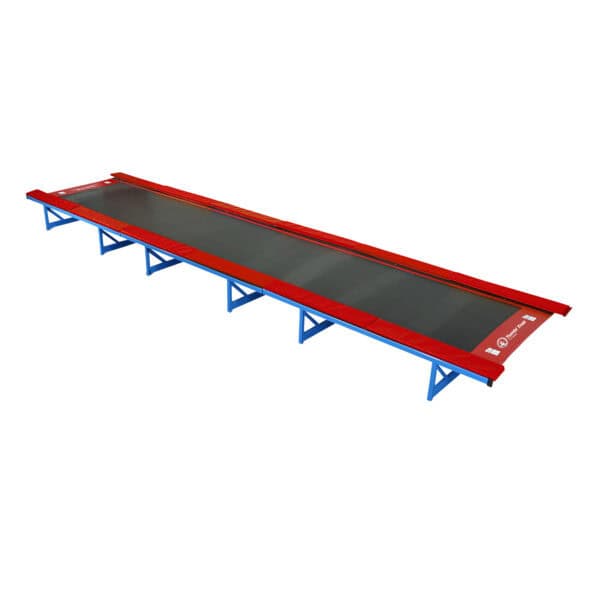
Standard trampolines are designed for stationary bouncing, keeping the user in the center. A linear track is engineered for directional movement. Children practice walking, running, and directional changes — functional movements that transfer to daily life.
Children with neurological, orthopedic, sensory, or developmental differences. The combination of vestibular input (movement through space) and proprioceptive input (joint and muscle feedback) engages children who are sensory-seeking or sensory-avoiding, making sessions more motivating.
These are dedicated pieces of equipment that require a clear, rectangular footprint. They are best suited for environments that can accommodate a long “runway” setup, such as sensory gyms, clinics, school multipurpose rooms, or basements with ample length.