


Cuddle Boxes
Safe havens for sensory regulation and active play.
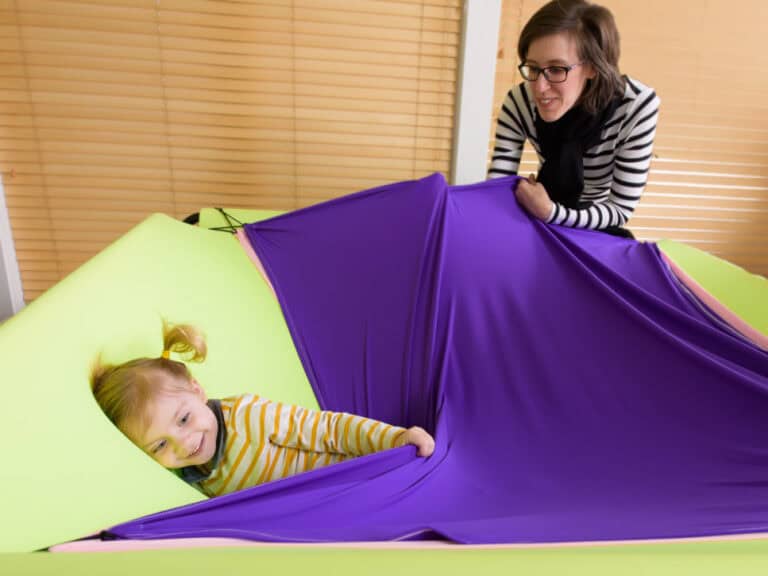
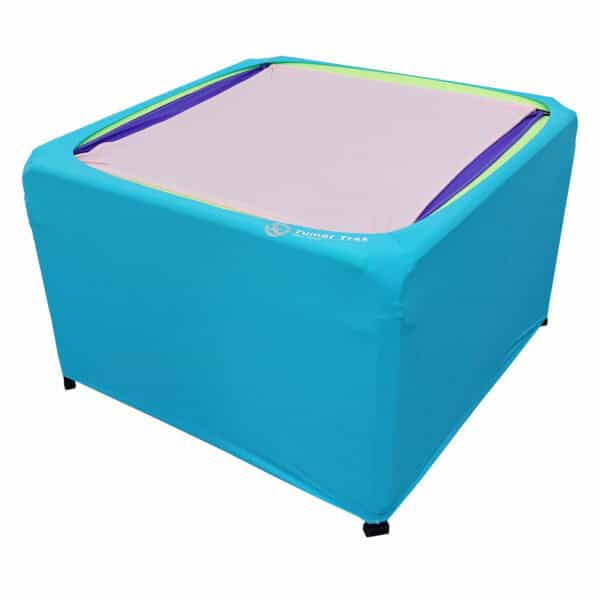
Some children need a contained space to feel free to move. Cuddle Boxes offer exactly that — an enclosed structure with dynamic Lycra layers that respond to pushing, bouncing, and stretching. The surface builds core strength and coordination while the boundaries help regulate the nervous system.
FAQs about Cuddle Boxes
They’re excellent for both! They can be high-energy zones where a child works on “heavy work” by pushing and balancing against the resistance. Moments later, they can become a quiet, low-stimulus cocoon for reading or decompressing. This versatility makes Cuddle Boxes valuable tools for managing energy levels throughout the day.
Therapists use Cuddle Boxes to build core strength, coordination, and body awareness through resistive play. Children push against the Lycra, stretch across it, bounce on it, or nestle underneath it. The enclosed structure also offers a calming space for children who need boundaries to feel regulated.
While any child can enjoy the fun of a “fort,” Cuddle Boxes are particularly beneficial for children with Autism Spectrum Disorder (ASD), Sensory Processing Disorder (SPD), ADHD, or anxiety. They’re also valuable for children with low muscle tone (hypotonia) who need engaging ways to activate their core muscles.
Yes. With appropriate supervision, families often use a Cuddle Box as a safe, engaging space for imaginative play, calming routines, or movement breaks. Its soft structure makes it approachable for children who benefit from a cozy, contained environment.